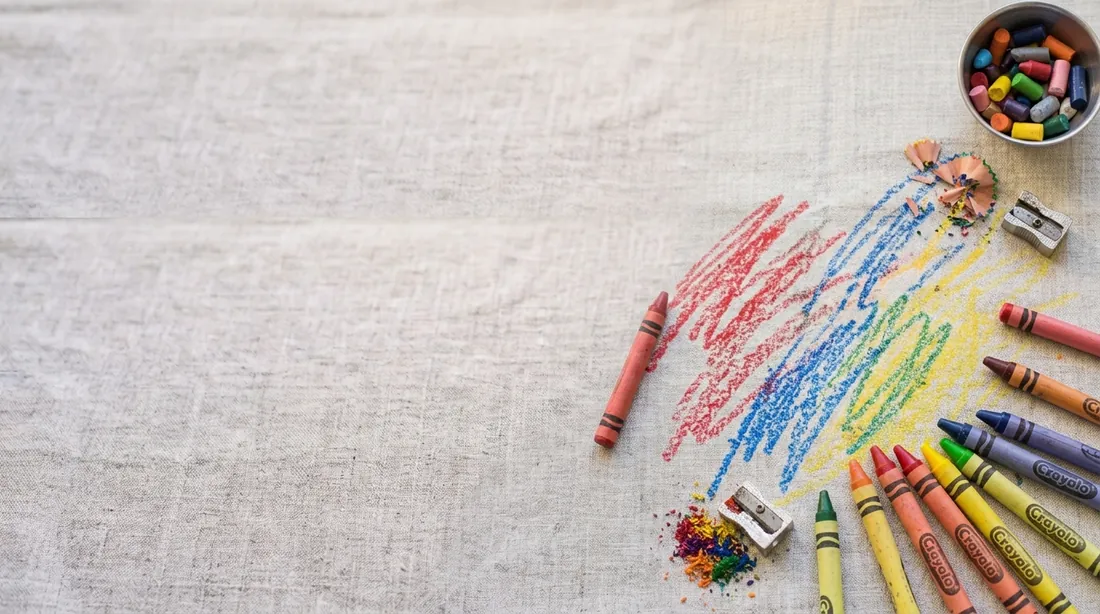
How to remove crayon stains
Lay the fabric face-down on white paper towels and treat the back with a pre-wash spot remover (two minutes per side), work in liquid dishwashing detergent, then wash in hot or warm water with heavy-duty liquid detergent and sodium perborate bleach. If color remains, soak or wash with chlorine bleach if fabric-safe, or oxygen bleach. For a whole load marked by a melted crayon, UGA points to coin-operated or commercial dry cleaning. [1][2]
Scrape off excess crayon with a blunt knife and treat the stain before it goes anywhere near the washer or dryer — stains that have been laundered and dried are almost impossible to remove. [2]
- Dull knife (to scrape)
- White paper towels
- Commercial pre-wash spot and stain remover (aerosol works better on greasy stains)
- Liquid dishwashing detergent
- Heavy-duty liquid laundry detergent
- Sodium perborate (oxygen) bleach or fabric-safe chlorine bleach
- Dry-cleaning solvent (for heavy marks)
Method
- Position the stained area face-down on white paper towels. Apply a commercial pre-wash spot and stain remover, wait about two minutes, flip the fabric and repeat on the other side (aerosol pretreatments work better on greasy stains). [1][2]
- Apply liquid dishwashing detergent and work it into the fabric; for stubborn marks rub in heavy-duty liquid detergent. [1][2]
- Wash promptly in hot or warm water with a heavy-duty liquid detergent and sodium perborate bleach. [1][2]
- If a color stain remains, soak or rewash using chlorine bleach if it is safe for the fabric, or oxygen bleach. [2]
Check the stain before the item is laundered without treatment or machine-dried — a crayon mark that has been washed and dried is almost impossible to remove. Rewash with a fabric-safe bleach if any color remains. [2]
If that didn't work
For extra-heavy wax, scrape the surface wax off with a dull knife, press the stain between clean paper towels with a warm, dry iron (moving the towels frequently so the wax transfers without re-staining), then place the stain face-down on fresh paper towels and sponge the back with dry-cleaning solvent; let dry, launder, and rewash with fabric-safe bleach if color remains. Illinois also offers a soap route: wash 10 minutes in hot, soft water with a soap such as Ivory plus half a cup of baking soda, work a soap paste into what remains, wash five minutes, and rinse. [2]
Cautions
Never use gasoline, lighter fluid, or carbon tetrachloride as cleaning solvents — the danger is extreme. [1][3]
Read the care label, pretest every agent on a hidden area, provide ventilation for solvent products, keep them away from open flames, and wear rubber gloves. [1]
acetate, triacetate, modacrylic, acrylic: Rubbing alcohol damages acetate, triacetate, modacrylic, and acrylic fibers — dilute with 2 parts water for use on acetate. [1]
Some crayon colors — red in particular — can leave a dye stain that is difficult or impossible to remove. [2]
Whole load / washer & dryer (melted crayon)
Method
- For a whole load of clothes marked by a melted crayon, use coin-operated dry-cleaning or a commercial dry cleaner rather than rewashing at home. [1]
- Clean the washer: spray the drum with a commercial pre-wash stain remover, wipe with a soft cloth, then run a load of rags on a full cycle with heavy-duty liquid detergent, hot water, and a full water level. [1]
- Clean the dryer by running wet rags through a drying cycle to pick up the melted wax. [1]
Carpet & rugs
Method
- If the crayon is soft, freeze it with an ice cube in a plastic bag, then scrape or blot off as much as possible with a dull knife or white paper towel. [2]
- Sponge with a small amount of commercial dry-cleaning solvent and blot with an absorbent pad; or cover the wax with a clean cloth or paper towels and press with the tip of a warm (not hot) iron, repeating with clean sections until the wax transfers out of the carpet. [1][2]
- For remaining dye, apply rubbing alcohol diluted 1 part alcohol to 2 parts water (pretest on a hidden area), blotting after each small application; on the pile rub in one direction only and never let alcohol reach the backing. [1][2]
- Follow with a detergent solution of 1/4 teaspoon hand dishwashing detergent (no lanolin or bleach) per quart of water, blot, rinse with sprayed tap water, and dry under a weighted pad of paper towels. [2]
If that didn't work
If color still shows, moisten the tufts with 3% hydrogen peroxide, let it stand for one hour, blot, and repeat until the carpet is stain-free — light turns the peroxide back to water, so no rinsing is needed. Finish by shampooing to remove any solvent residue. [2]
Cautions
Don't let alcohol penetrate the carpet backing — it destroys the latex bond — and don't rub in circles, which can destroy the pile texture. Use solvent sparingly: it can destroy the backing and foam padding. Be careful not to melt the fibers with the iron. [2][1]
Upholstery & mattresses
Method
- If the wax is soft, freeze it with an ice cube in a plastic bag, then gently scrape off the excess with a dull knife, spoon, or spatula. [2][1]
- Sponge the stain with a small amount of commercial dry-cleaning solvent using a clean white cloth, blotting until the solvent is absorbed, and repeat until the mark fades. [1][2]
- Mix 1 teaspoon of white dishwashing detergent in 1 cup of lukewarm water, sponge the area, rinse with clean water, and blot thoroughly dry; for lingering dye, sponge with 1 part rubbing alcohol in 2 parts water, rinse, and dry. [1]
If that didn't work
Illinois's WD-40 route: spray the stain with WD-40 and let it stand a few minutes, tamp, wipe off the residue with a paper towel, re-spray and apply liquid dishwashing detergent directly on the sprayed area, tamp again, wipe, and repeat until the stain disappears. [2]
Cautions
Overwetting can make the fabric finish migrate and leave a ring, and solvent can destroy the padding — use small amounts and blot. Alcohol damages acetate-family fibers. [1]
Leather & suede
Method
Not covered by our sources
- Suede clothing: No fetched source covers crayon on suede garments (UGA's suede guidance addresses suede wall coverings only).
- Dry clean only garments (single item): UGA's dry-cleaning advice covers whole loads of crayon-marked clothes; no fetched source gives a home procedure for a single dry-clean-only garment beyond taking it to a cleaner.
What people report
No community reports collected for this stain yet. Community reports are always linked, dated, and labeled anecdotal — we never invent them.
Sources
- Institutional University of Georgia Extension — Remove Stains From Crayon (accessed 2026-08-19)
- Institutional University of Illinois Extension — Stain Solutions: Crayon (accessed 2026-08-19)
- Institutional Texas A&M AgriLife Extension — Removing Stains from Washable Fabrics (accessed 2026-08-18)
Updated 2026-08-19. Compiled from the cited sources; not independently verified by this site. Spotted an error? See the corrections policy.