Sort it before the stain sets
Pick the stain, the material, and what has already happened. Get the safest documented next step — with every claim labeled by where it comes from: university guidance, industry body, manufacturer label, third-party test, or clearly-marked community anecdote.
Sort my stain Browse all stains
- What caused it?Pick the stain or closest match — 34 covered, each from documented sources.
- What is stained?Choose the material or surface — shown only where sources cover it.
- What happened already?Tell us what has been done so far — fresh, dried, washed or heat-set changes the advice.
- Get the plan.Do-now, avoid, method, checkpoint before heat, fallback — every step cited.
Every claim has an origin
An automated check blocks publication of any step without a citation, and every page lists its complete sources with access dates.
Materials change the answer
The garment care label identifies a safe cleaning method and warns against harmful steps. If it says do not bleach, do not use bleach. [1]
We say when we don't know
Combinations our sources don't cover say so, with conservative advice instead of guesses. Disagreements between sources are shown, not hidden.
Stain families
 Food and drink
Coffee, red wine, mustard, beer
Food and drink
Coffee, red wine, mustard, beer
 Oil and grease
Cooking oil, grease, sunscreen
Oil and grease
Cooking oil, grease, sunscreen
 Biological
Blood, sweat, egg, milk, mildew
Biological
Blood, sweat, egg, milk, mildew
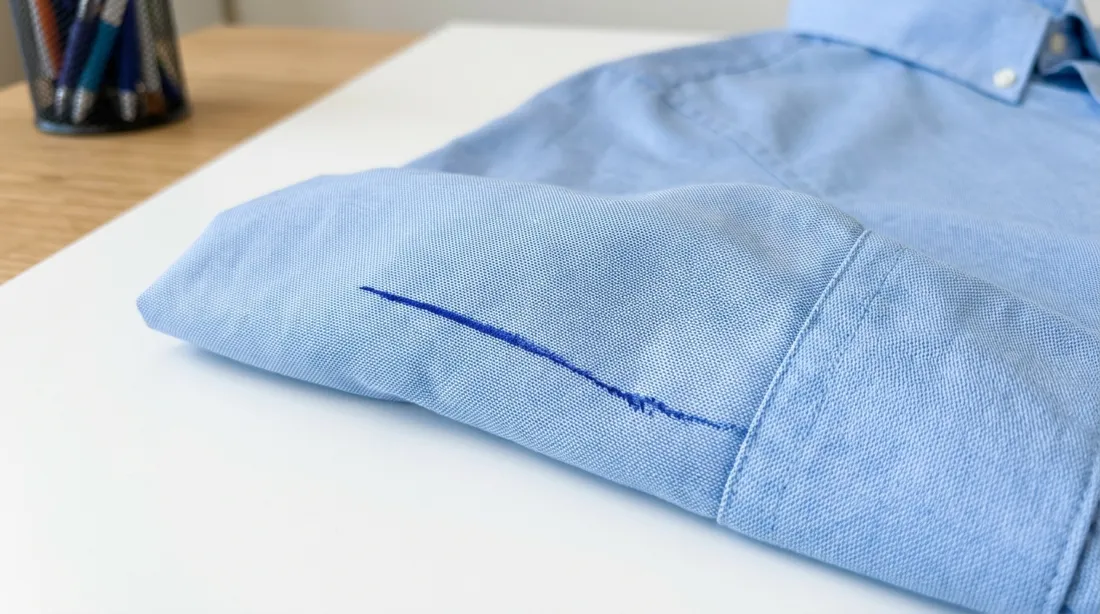 Ink and pigment
Biro, marker, crayon, hair dye
Ink and pigment
Biro, marker, crayon, hair dye
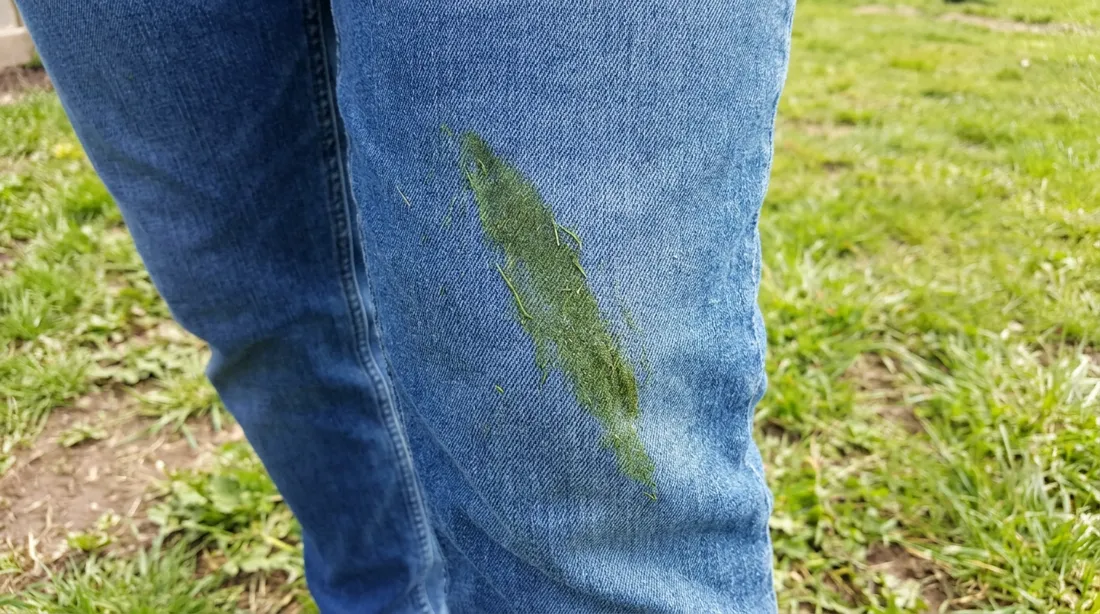 Outdoor
Grass, mud, soil
Outdoor
Grass, mud, soil
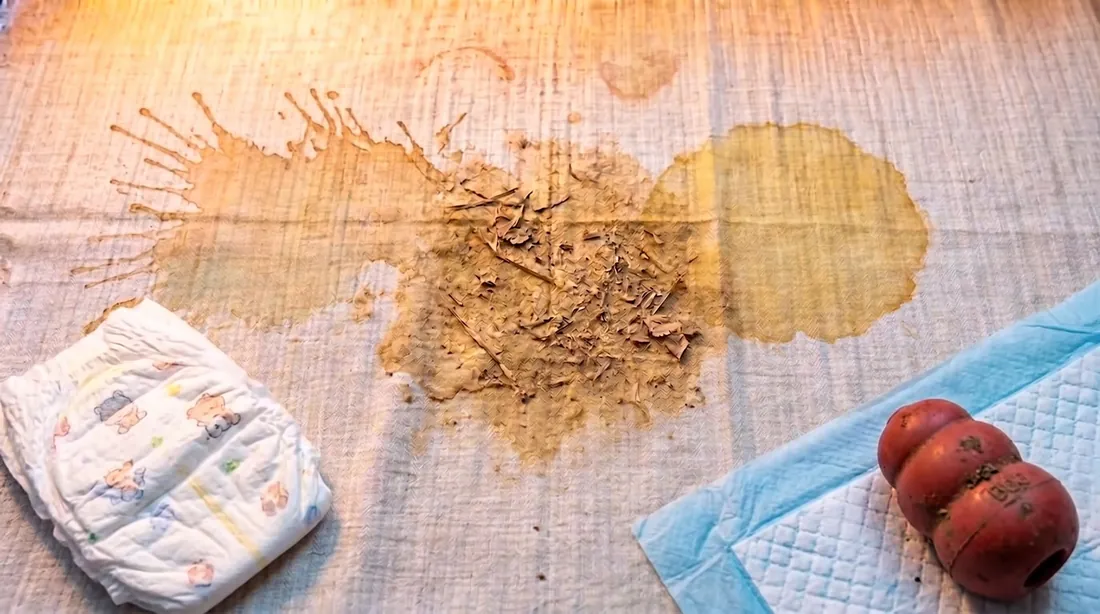 Accidents (pet and human)
Urine, vomit, feces — pet or person
Accidents (pet and human)
Urine, vomit, feces — pet or person
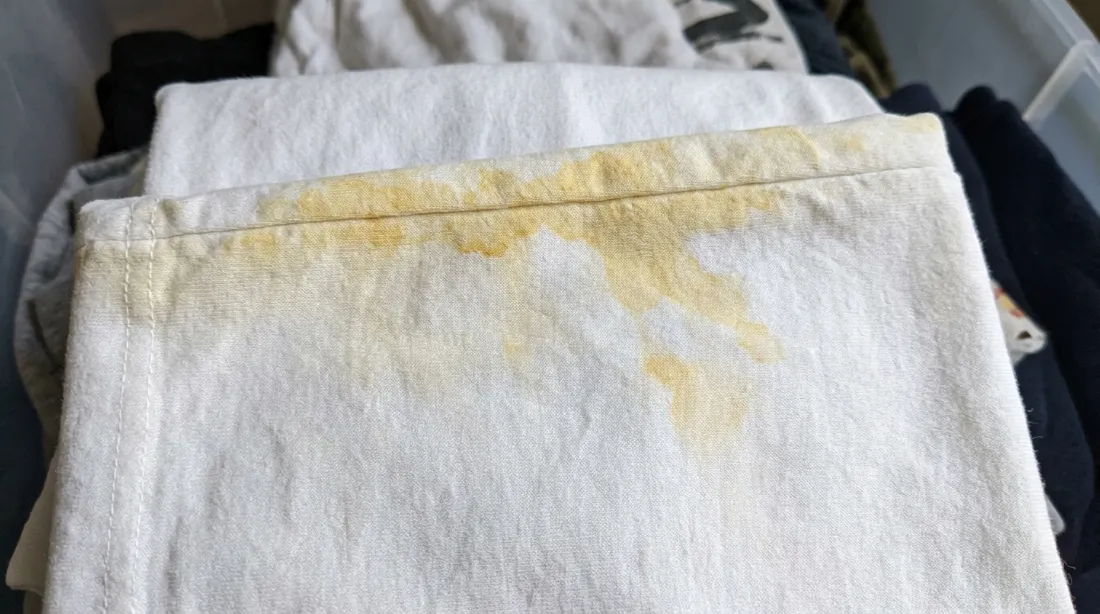 Old and set-in
Storage yellowing, set-in marks
Old and set-in
Storage yellowing, set-in marks
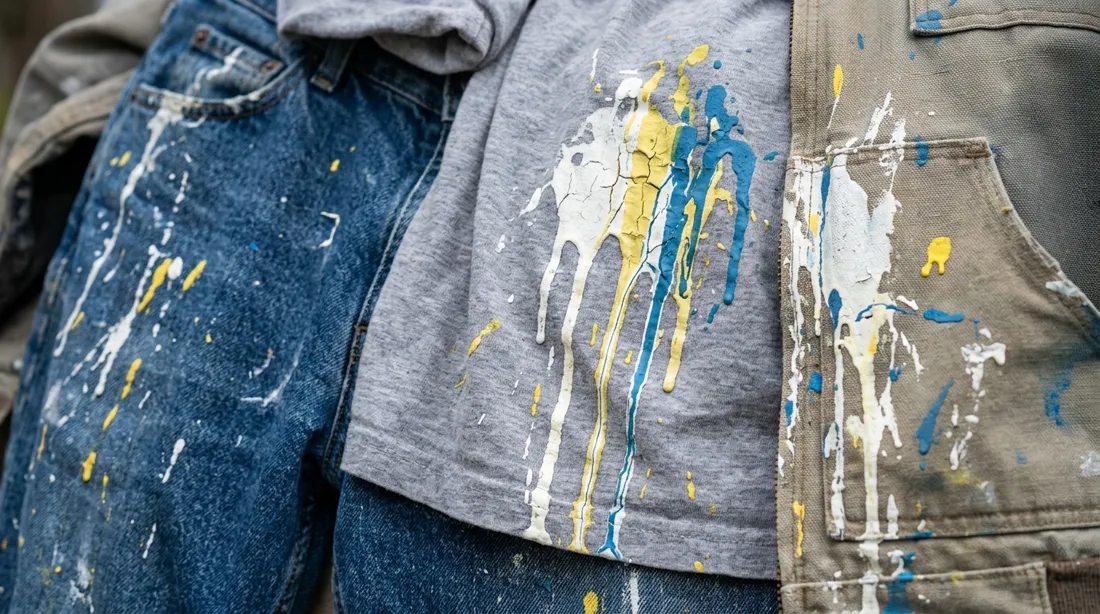 Household and DIY
Candle wax, gum, paint, glue, rust
Household and DIY
Candle wax, gum, paint, glue, rust
Stain guides
All stains A–Z Blood
Work fast and keep everything cold: rinse fresh blood under cold running water and...
Blood
Work fast and keep everything cold: rinse fresh blood under cold running water and...
 Cooking oil & grease
Absorb what you can, then get an oil-cutting pretreatment into the fibers and launder...
Cooking oil & grease
Absorb what you can, then get an oil-cutting pretreatment into the fibers and launder...
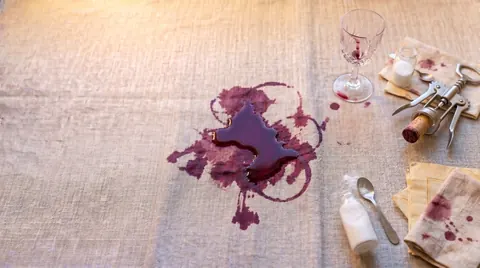 Red wine
Act fast: blot the spill, then sponge with cool water or club soda; table salt...
Red wine
Act fast: blot the spill, then sponge with cool water or club soda; table salt...
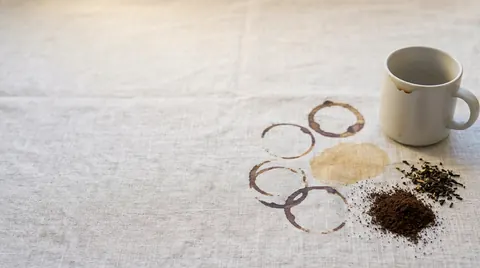 Coffee & tea
Sponge or rinse a fresh coffee or tea stain promptly in cool water, then pretreat...
Coffee & tea
Sponge or rinse a fresh coffee or tea stain promptly in cool water, then pretreat...
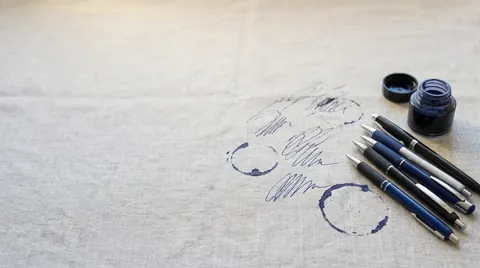 Ballpoint & ink
Treat ink while it is fresh — laundering or drying can set it, and dried India ink...
Ballpoint & ink
Treat ink while it is fresh — laundering or drying can set it, and dried India ink...
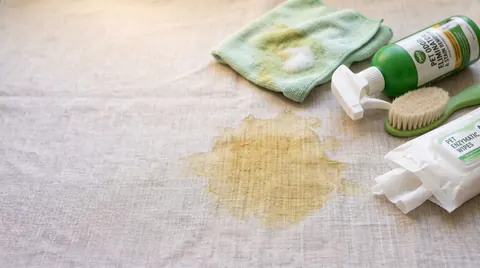 Urine (human & pet)
On washable fabric, rinse with cool water, soak in cool water with a heavy-duty...
Urine (human & pet)
On washable fabric, rinse with cool water, soak in cool water with a heavy-duty...
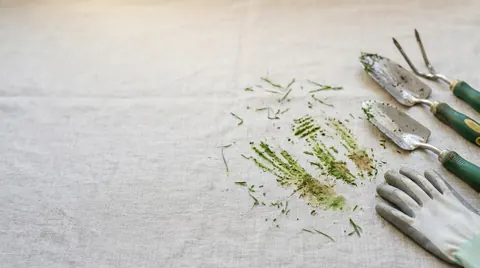 Grass
Grass is a tannin-and-protein stain, so keep heat away from it: pretreat both sides...
Grass
Grass is a tannin-and-protein stain, so keep heat away from it: pretreat both sides...
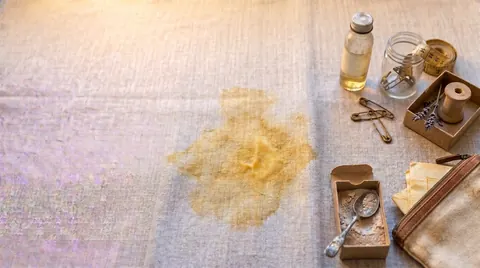 Old yellow storage stains
Yellowing on stored textiles comes from detergent residue, oxidized oily soil, fiber...
Old yellow storage stains
Yellowing on stored textiles comes from detergent residue, oxidized oily soil, fiber...
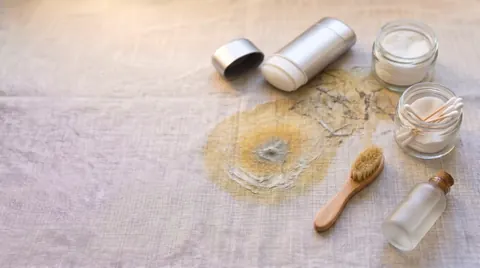 Sweat & deodorant
For perspiration, soak the garment 15–30 minutes in warm water with a sodium...
Sweat & deodorant
For perspiration, soak the garment 15–30 minutes in warm water with a sodium...
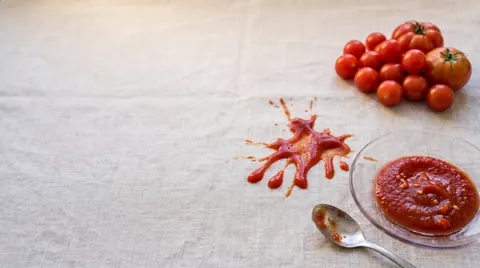 Tomato & ketchup
Scrape off the excess, then treat washables with a pre-wash spot remover or rub in...
Tomato & ketchup
Scrape off the excess, then treat washables with a pre-wash spot remover or rub in...
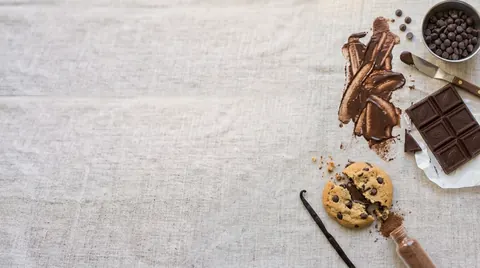 Chocolate
 is a combination stain: deal with the greasy part first, then the color. On...
Chocolate
Chocolate is a combination stain: deal with the greasy part first, then the color. On...
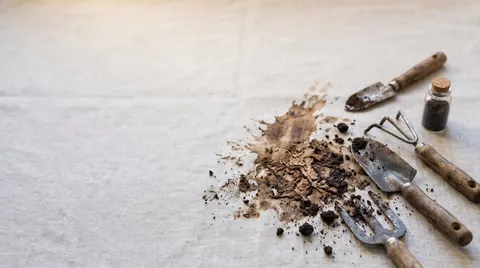 Mud & soil
Let mud dry, then scrape or brush off as much as possible before any water touches...
Mud & soil
Let mud dry, then scrape or brush off as much as possible before any water touches...
Five kinds of evidence, never blended
Institutional guidance, industry bodies, manufacturer labels, third-party tests, and community anecdotes answer different questions. Each is labeled; none is dressed up as another. No invented statistics, no fake tests, no fictional reviewers.
How evidence is labeled →Community reports, honestly framed
Real forum threads — linked, dated, and always labeled anecdotal. We publish no success percentages, because we have no verified outcome data yet, and we'd rather be right than impressive.
Read community reports →