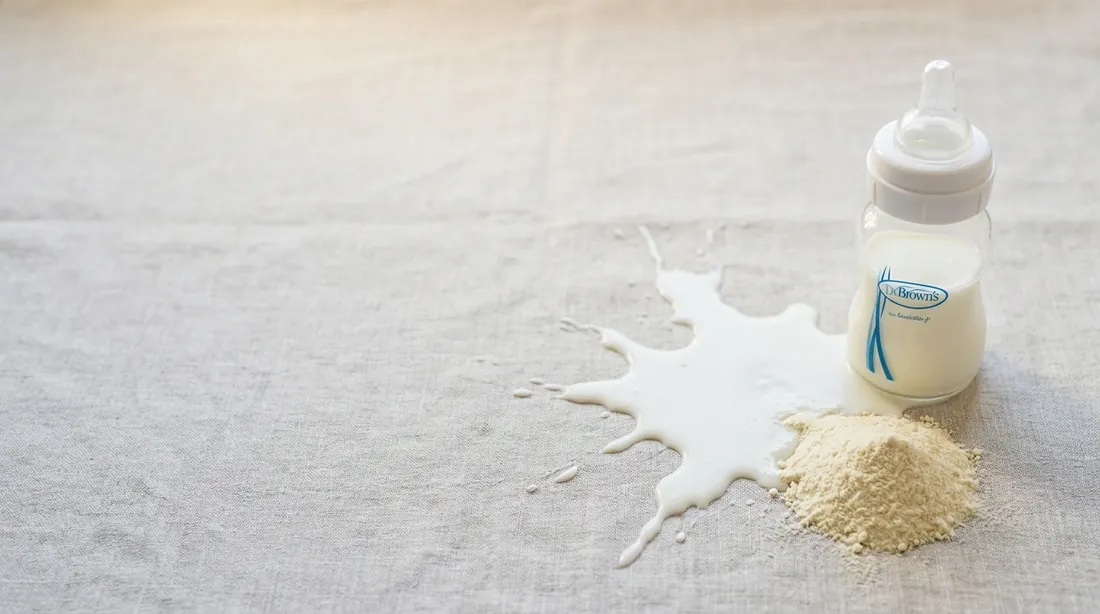
How to remove baby formula & milk stains
Formula and milk are protein stains: rinse or wipe off as much as possible while fresh, then soak in cold water — hot water first cooks the protein into the fibers. Rub in detergent (or use an enzyme presoak on cottons and synthetics), launder, and only escalate to a fabric-safe bleach if a trace remains after air-drying and inspection. [1][2][3]
- Cold water
- Liquid laundry detergent or prewash stain remover
- Enzyme presoak product (optional)
- Oxygen bleach (optional, if stain persists)
Method
- Scrape or wipe off any solids and rinse the fresh stain from the fabric; if it has dried, brush off crusted matter first. [2][1]
- Soak the item in cold water. For dried or stubborn stains, soak in cold water with detergent, or use an enzyme presoak product for 15–30 minutes (skip enzymes on silk and wool — they digest protein fibers). [1][3]
- Rub liquid detergent into the stain, or spray it with a commercial prewash spot-and-stain remover. [3][1]
- Launder. Sources differ on temperature (see conflicts): UGA launders warm-to-hot with an oxygen (sodium perborate) bleach, while Kentucky Extension advises warm — not hot — water after protein-stain treatment. [3][1]
Rinse and inspect before any machine drying or ironing — heat permanently sets a remaining stain. If a trace remains, soak another half hour and rewash. [1][4]
If that didn't work
If the stain survives detergent and enzyme treatment, re-launder using the recommended amount of detergent plus a bleach appropriate for the fabric — oxygen bleach for most fabrics, or chlorine bleach only if the care label allows it. Bleach the whole garment rather than spotting one area, to avoid uneven color loss. [1][3][4]
Cautions
silk, wool, spandex: Chlorine bleach must not be used on silk, wool, spandex, polyurethane-foam-containing items, or flame-retardant finishes; check the care label and test any product on a hidden area first. [1][4]
silk, wool: Enzyme presoaks digest protein and will damage silk and wool; never combine them with chlorine bleach. [1]
baby clothes: For baby clothes, most families can use their regular detergent; switch to a milder, fragrance-free product only if the baby's skin shows irritation. Soap flakes strip the flame-retardant properties of sleepwear — regular detergent preserves them. [2]
Why this works
Milk and formula belong to the protein-stain group. Heat applied before the protein is removed cooks it, causing coagulation between the fibers in the yarns, which is why cold water comes first and enzymes (which break down protein) are the recommended booster. [1]
Carpet & rugs
Method
- Mix 1 teaspoon of neutral detergent in 1 cup of lukewarm water; blot it onto the stain with a white cloth, then blot up with a dry absorbent cloth. [3]
- Apply a solution of 1 tablespoon non-sudsing ammonia in 1/2 cup of water and blot. [3]
- Repeat the detergent solution, then rinse with water and blot until dry. [3]
If that didn't work
If the stain persists, sponge with a commercial carpet cleaner (UGA names Resolve or K2R), following the product label. [3]
Cautions
wool carpet, silk: Pretest solutions on an inconspicuous area of the carpet. Ammonia damages silk and wool fibers — if it must be used on them, dilute it with an equal amount of water. Ventilate the room while working. [3]
Upholstery & mattresses
Method
- Sponge with a commercial upholstery cleaner, following the label; or use the home-mixed route in the next steps. [3]
- Blot with 1 teaspoon of neutral detergent in 1 cup of lukewarm water, then with 1 tablespoon of household ammonia in 1/2 cup of water. [3]
- Repeat the detergent solution, rinse, and blot out as much moisture as possible. [3]
If that didn't work
If home treatment fails, repeat with a commercial upholstery cleaner per its label. [3]
Cautions
upholstery, silk, wool: Pretest for colorfastness in a hidden spot. Using too much water can cause rings and finish migration. Dilute ammonia with an equal amount of water before any use on silk or wool coverings. [3]
Hard floors and surfaces
Method
- Wipe up the spill immediately with a sponge dipped in warm sudsy water. [3]
- Rinse the area with clear water. [3]
- Do not let baby food sit: some varieties contain dyes that will stain the surface if left in place. [3]
If that didn't work
On wood furniture, apply a wood cleaner about one square foot at a time with a fresh cloth, remove it quickly with a second cloth, then rewax and buff. [3]
Cautions
wood, tile, stone: Avoid abrasive cleaners on finished surfaces unless the manufacturer specifically recommends them. [3]
Not covered by our sources
- Mattress: No source fetched this session covers formula or milk on mattresses.
- Car seat: No fetched source covers car-seat harnesses or padding; manufacturers' instructions were not fetched.
Where sources disagree
- Launder in warm to hot water with oxygen bleach, or in hot water with chlorine bleach if safe for the fabric (after a cold-water soak). [3]
- Launder protein stains in warm — not hot — water after treatment; hot water applied to protein cooks it and coagulates it between the fibers. [1]
We show both positions rather than silently choosing. When in doubt, follow your care label and the more conservative option.
- Milk and cream are combination stains: treat the greasy portion first (dry-side solvent), dry without heat, then treat as a wet/protein stain. [4]
- Milk is handled as a straight protein stain: soak in cold water, launder, with an enzyme presoak for dried stains. [1]
We show both positions rather than silently choosing. When in doubt, follow your care label and the more conservative option.
What people report Anecdotal
Real threads from public forums, linked and labeled. These are individual experiences, not verified results, and never a substitute for the sourced method or safety guidance above.
Several posters reported that washing with a stain remover and then drying in sunlight cleared yellow milk stains (even over a couple of grey days), and one said boiling clothes in an oxygen cleaner removed milk and banana stains but also stripped a printed design.
“Wash using a stain remover, then dry in direct sunlight.”
Getting yellow milk stains out baby clothes — Mumsnet, 2020-10-06 · accessed 2026-08-18 · anecdotal
Sources
- Institutional University of Kentucky Cooperative Extension Service — Stain Removal for Washable Fabrics (FCS2-840 / H.E. 2-840) (accessed 2026-08-18)
- Institutional American Academy of Pediatrics (HealthyChildren.org) — Cleaning Baby Clothes (accessed 2026-08-18)
- Institutional University of Georgia Extension — Remove Stains from Baby Food/Formula (accessed 2026-08-18)
- Institutional Texas A&M AgriLife Extension — Removing Stains from Washable Fabrics (accessed 2026-08-18)
Updated 2026-08-18. Compiled from the cited sources; not independently verified by this site. Spotted an error? See the corrections policy.