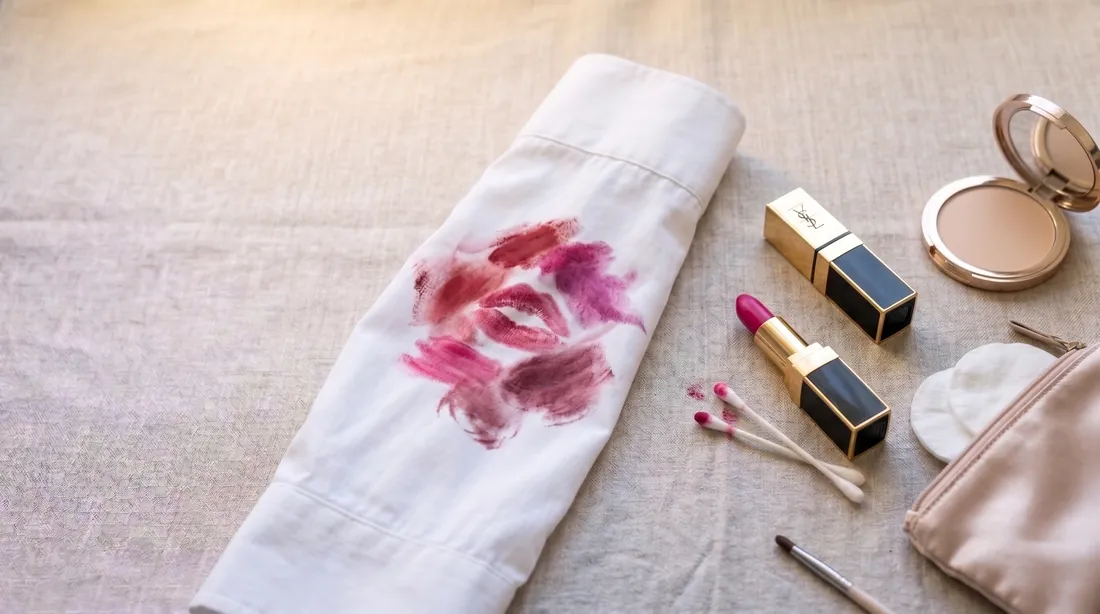
How to remove lipstick stains
Lipstick is an oily, heavily pigmented stain: dissolve the waxy base first with a dry-cleaning solvent or solvent-based stain stick, blotting until no more color lifts, then work liquid detergent into the spot and launder. Any dye left after washing comes out with an oxygen (all-fabric) bleach, or chlorine bleach on fabrics that tolerate it. Treat before the garment is washed and dried. [1][2]
- Dry-cleaning solvent, solvent spot remover, or stain stick
- Heavy-duty liquid detergent
- All-fabric (oxygen) bleach; chlorine bleach for stubborn dye on bleach-safe fabric
- White cloths
Method
- Apply a dry-cleaning solvent or commercial spot remover by spray or sponge (or use a stain stick) and blot until no more pigment transfers to your cloth. [2][1]
- Rinse, then work liquid detergent into the stain — Illinois says rub in heavy-duty liquid detergent and scrub in hot water; UGA's method uses a light-duty detergent before laundering. [2][1]
- Launder as usual. [1][2]
- If dye remains, soak in all-fabric (oxygen) bleach — the gentler option — or use liquid chlorine bleach on stubborn dye if the fabric is bleach-safe. [2][1]
Inspect before drying and repeat the solvent-detergent-bleach cycle while the stain is fresh; drying locks the dye in. [2]
If that didn't work
UGA's second apparel routine: after solvent blotting, sponge with water, apply diluted dishwashing detergent with a few drops of vinegar, blot frequently, flush with water, sponge with alcohol, and finish with chlorine bleach if the fabric is safe for it. [1]
Cautions
all fabrics: Pretest solvents and detergents on an inconspicuous area and check the care label first. [1]
silk, wool: Ammonia (used in wet-spotter mixes) damages silk and wool — dilute with an equal amount of water if it must be used, and flush all traces out with water. [1]
all surfaces: Ventilate when using dry-cleaning solvents, keep them from open flames, and wear rubber gloves. [1]
Carpet & rugs
Method
- Remove excess immediately — blot wet residue or vacuum up dry bits. [2]
- Apply dry-cleaning solvent to a white towel and blot (don't rub) until no more color transfers; let the solvent evaporate. [2][1]
- Sponge and blot with a mix of 1 tablespoon detergent and 1 tablespoon white vinegar in 2 cups of warm water. UGA's alternative for lingering color is a wet spotter (1 part glycerin, 1 part white dishwashing detergent, 8 parts water) with a few drops of ammonia, flushed out with water afterward. [2][1]
- Rinse with cold water and blot dry thoroughly, repeating the blotting several times. [2]
If that didn't work
If color persists, reapply the wet spotter with a few drops of vinegar instead of ammonia, tamping gently if the fiber permits, then flush with clear water and let dry. [1]
Cautions
carpet: Flush ammonia traces out completely and avoid overwetting the carpet. [1]
Upholstery fabric
Method
- Sponge the stain with dry-cleaning solvent on a clean white cloth and blot; follow with a dry spotter (1 part coconut or mineral oil to 8 parts solvent), blotting immediately and repeatedly until the stain stops lifting. [2][1]
- If the stain starts to spread, flush or blot immediately with liquid dry-cleaning solvent, then let it evaporate. [1]
- If color persists, sponge with water and apply a wet spotter (glycerin, dishwashing detergent, water, plus a few drops of ammonia), tamping if the fabric permits; blot frequently and flush with water to remove all ammonia. [1]
If that didn't work
Repeat with wet spotter plus a few drops of vinegar, tamp if the fabric permits, flush with clear water, and allow to dry. [1]
Cautions
silk, wool, rayon: On silk, wool, modacrylic, rayon, and triacetate, work gently and finish with a vinegar-based wet spotter pass rather than more ammonia; ammonia harms silk and wool. [1]
Leather vinyl
Method
- Wipe the stain with a cloth dipped in the suds of mild detergent and water, then wipe with a clean cloth. [1]
- If a greasy mark remains, powder it with an absorbent such as cornmeal, give it 2–3 hours or overnight to work, and gently brush it out; repeat if needed. [1]
- As a last resort, dab — never rub — with a cloth dipped in dry-cleaning fluid. [1]
If that didn't work
Repeat the absorbent-powder cycle before resorting to dry-cleaning fluid; the same routine applies to fur. [1]
Cautions
leather: On leather, follow up with saddle soap conditioning. [1]
Wood finished
Method
- Wipe the stain with mineral spirits or naphtha on a clean cloth, rotating so a clean area keeps picking up color. [1]
- Apply paste wax (or solvent-based wood cleaning wax) with a #0000 superfine steel wool pad, rubbing with the grain. [1]
- Buff with a clean cloth, adding more wax if needed. [1]
If that didn't work
On wood floors and paneling, apply the solvent or solvent-based cleaning wax with #0000 steel wool and buff. [1]
Cautions
wood: Solvents are flammable and their fumes hazardous — ventilate and keep away from flames and pilot lights. [1]
Hard surfaces
Method
- On painted walls, stainless steel, glass, and hard plastics: wash with warm sudsy water, rinse, and wipe dry. [1]
- If color remains, add a few drops of ammonia to the warm sudsy water, wipe, rinse well, and dry. [1]
- On resilient flooring or ceramic tile, use warm sudsy water with a few drops of ammonia and rub gently with a plastic scouring pad (never steel wool); rinse and dry. [1]
If that didn't work
On marble: soak a white blotter in a few drops of ammonia mixed into 1 cup rubbing alcohol (or in non-flammable dry-cleaning fluid), weight it over the stain, and reapply until the grease and color lift; remaining color bleaches out under a poultice of chlorine bleach, powdered detergent, and water kept damp with a cloth. [1]
Cautions
resilient floor, ceramic tile: Never use steel wool on resilient floors or ceramic tile. [1]
Not covered by our sources
- Suede: No fetched source gives lipstick steps for suede; UGA covers leather, vinyl, and fur but not suede for this stain.
Where sources disagree
- Rub in heavy-duty liquid detergent and scrub in hot water before laundering. [2]
- Apply a light-duty detergent after the solvent pass, then launder. [1]
We show both positions rather than silently choosing. When in doubt, follow your care label and the more conservative option.
What people report Anecdotal
Real threads from public forums, linked and labeled. These are individual experiences, not verified results, and never a substitute for the sourced method or safety guidance above.
The original poster reported back that leaving Vanish spray on the lipstick mark for about two hours followed by a 60C wash removed it completely from a white duvet cover.
“Left the Vanish spray on it for about two hours... The lipstick has gone!”
Help! Lipstick on white duvet cover!!! — Mumsnet, 2004-08-26 · accessed 2026-08-18 · anecdotal
Sources
- Institutional University of Georgia Extension — Remove Stains from Cosmetics (Makeup, Sunscreen) (accessed 2026-08-18)
- Institutional University of Illinois Extension — Lipstick and lipbalm — Stain Solutions (accessed 2026-08-18)
Updated 2026-08-18. Compiled from the cited sources; not independently verified by this site. Spotted an error? See the corrections policy.