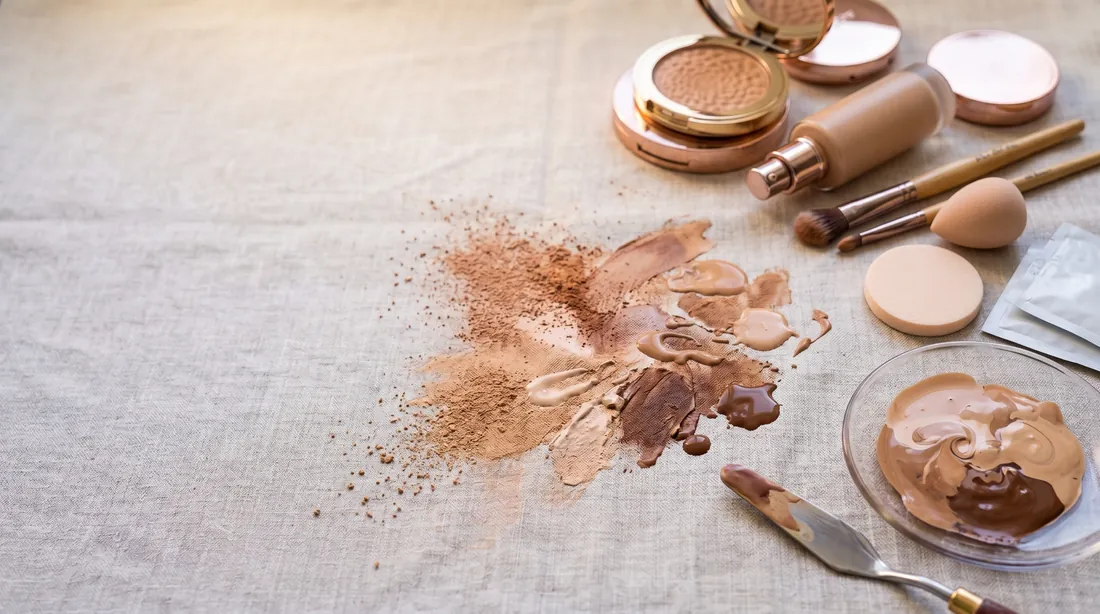
How to remove makeup & foundation stains
Match the treatment to the formula. Water-based makeup comes out with bar soap or heavy-duty liquid detergent rubbed in before laundering. Oil-based makeup (most foundation and mascara) needs a greasy-stain routine: saturate with an aerosol pre-wash stain remover, rub in heavy-duty liquid detergent, launder immediately, and bleach any remaining color with a fabric-safe bleach. Treat before the item is ever washed and dried. [1][2]
- Pre-wash stain remover (aerosol works best on greasy stains)
- Heavy-duty liquid detergent or bar soap
- Chlorine or oxygen bleach (fabric-safe)
- Dry-cleaning solvent (carpet/upholstery, heavy stains)
Method
- For water-based makeup: dampen the stain and rub it with bar soap, or pretreat with heavy-duty liquid laundry detergent or a paste of powdered detergent and water. [1]
- For oil-based makeup: saturate the area with a pre-wash stain remover (aerosol types work better on greasy stains) and let it penetrate for about a minute; for stubborn stains, also rub in heavy-duty liquid detergent. A waterless hand cleaner sponged on, rinsed, and air-dried is UGA's alternative first pass. [2][1]
- Launder immediately after pretreating. [2][1]
- If color remains, soak or wash in chlorine bleach if the fabric allows it, or in oxygen bleach. [2]
Check the stain before drying and repeat treatment while it is still fresh — all stain removal has to happen before the garment is laundered and dried, or the stain becomes nearly permanent. [2]
If that didn't work
For heavy stains, lay the stain face-down over absorbent paper towels, apply dry-cleaning solvent to the back, let it dry, rinse, and run the pretreat-and-launder steps again. If an oily cosmetic stain persists, work a few drops of ammonia into a light-duty liquid detergent solution on the stain. [2][1]
Cautions
all fabrics: Check the care label first and pretest cleaners on an inconspicuous area. [1]
silk, wool: Ammonia damages silk and wool — if it must be used near them, dilute it with an equal amount of water. [1]
all surfaces: Ventilate when using solvents, keep them away from open flames, and wear rubber gloves; washing soda is highly toxic, so keep it off skin. [1]
Carpet & rugs
Method
- Sponge the stain with a clean cloth dampened in dry-cleaning solvent, taking care not to soak the carpet; blot with absorbent cloths until dry, then let the area dry completely. [1]
- Sponge with clean water, blot, dry thoroughly, and brush to restore the pile. [1]
- If the stain remains, mix 1 teaspoon of neutral detergent in 1 cup of lukewarm water, blot the stain with a cloth dipped in the solution, then sponge with clean water and blot dry. [1]
If that didn't work
Repeat the solvent-then-detergent sequence; UGA's carpet instructions for foundation, mascara, and similar cosmetics rely on these two passes. [1]
Cautions
carpet, oriental rugs: Do not use oil-based solvents on antique Oriental rugs, and avoid overwetting — solvents destroy carpet backing and padding. [1]
Upholstery fabric
Method
- Sponge with a cloth dampened in dry-cleaning solvent without soaking the upholstery; blot with rotating absorbent cloths and let dry completely. [1]
- Apply a dry spotter (1 part coconut or mineral oil to 8 parts dry-cleaning solvent) with a dropper or syringe, cover with a pad dampened in dry spotter, and change pads as they pick up stain; finish by blotting with solvent, drying, then sponging with clean water. [1]
- Blot with a solution of 1 teaspoon neutral detergent in a cup of lukewarm water, then sponge with clean water and blot until dry. [1]
- On delicate fabrics, use a wet spotter instead: 1 part glycerin, 1 part liquid dishwashing detergent, 8 parts water, plus a few drops of ammonia, applied by dropper under a dampened pad; blot thoroughly, dry, and sponge with clean water. [1]
If that didn't work
A wet spotter keeps in a labeled plastic squeeze bottle — shake well and reapply, keeping the pad moist, until no more stain lifts. [1]
Cautions
upholstery, silk, wool: Overwetting can migrate the fabric finish and leave rings; ammonia in the wet spotter damages silk and wool unless diluted with equal water. [1]
Hard floor
Method
- Sponge or scrape off the excess makeup. [1]
- On brick, concrete, stone, or unglazed tile: scrub with a solution of washing (sal) soda or heavy-duty detergent in water using a soft-bristled brush. On resilient floors and ceramic tile: wash with warm sudsy water. [1]
- Rinse well with clear water and dry. [1]
If that didn't work
On finished wood, use only the foam of a dishwashing detergent-and-hot-water solution, rinse with a nearly dry cloth, and wipe dry immediately — never flood wood with water. [1]
Cautions
masonry floors: Washing soda is highly toxic — follow the label, avoid skin contact, and wear rubber gloves. [1]
Not covered by our sources
- Leather & suede: The fetched sources give leather steps for lipstick but not for foundation, mascara, or other makeup.
- Carpet nylon wool blend: UGA's carpet section for these cosmetics lists blended fibers 'except wool/nylon' blends without giving an alternative routine for them.
What people report Anecdotal
Real threads from public forums, linked and labeled. These are individual experiences, not verified results, and never a substitute for the sourced method or safety guidance above.
Two posters reported firsthand that micellar water on cotton wool pads removed foundation marks from coat collars, one saying nothing else had worked.
“I've removed foundation stains with cotton wool soaked in micellar water. Nothing else worked!”
Makeup on dark coat? (Image) — Mumsnet, 2024-02-16 · accessed 2026-08-18 · anecdotal
Sources
- Institutional University of Georgia Extension — Remove Stains from Cosmetics (Makeup, Sunscreen) (accessed 2026-08-18)
- Institutional University of Illinois Extension — Make-up (oil based) — Stain Solutions (accessed 2026-08-18)
Updated 2026-08-18. Compiled from the cited sources; not independently verified by this site. Spotted an error? See the corrections policy.