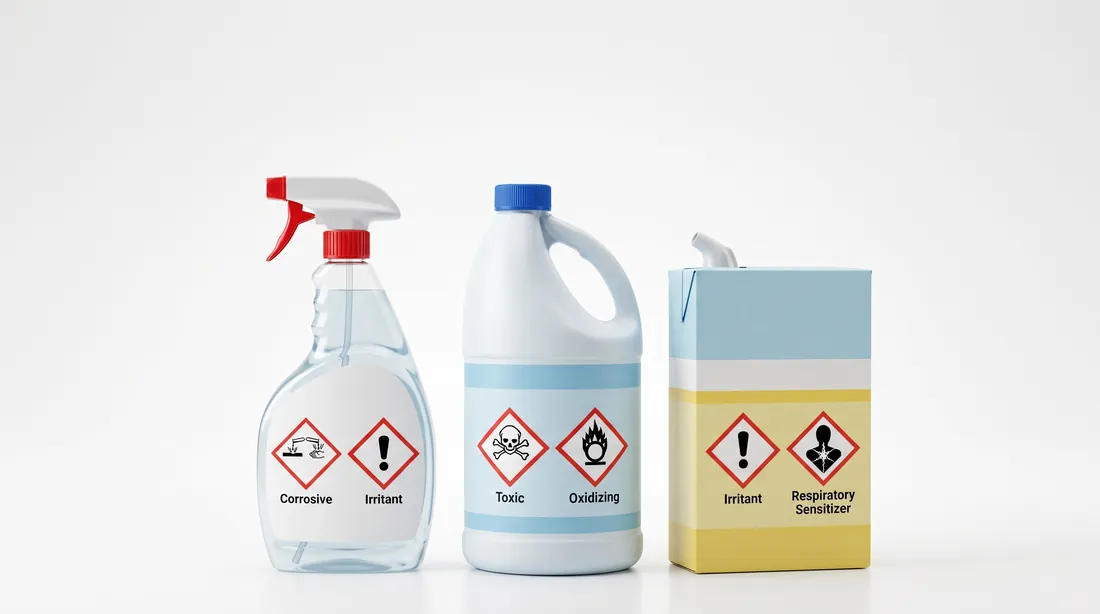
Cleaning product safety
The never-mix rules, ventilation, storage, and what to do after an exposure — from poison-control and public-health sources.
Never mix these
Never mix chlorine bleach with ammonia or products containing ammonia — including many glass and window cleaners, and also urine, so be careful around litter boxes and toilets. The combination produces toxic chloramine gases that can cause coughing, wheezing, chest pain, shortness of breath, and in serious cases pneumonia and fluid in the lungs. [1][2][3]
Never mix chlorine bleach with acids or acidic cleaners — including vinegar, lemon juice, some glass cleaners, dishwasher detergents, toilet and drain cleaners, and rust removers. Mixing releases chlorine gas, which irritates mucous membranes at low exposure and can cause severe breathing difficulty, vomiting, and fluid in the lungs at higher exposure. [1][2]
Do not mix bleach with other cleaning products generally — including oven cleaners, hydrogen peroxide, insecticides, and pool chemicals. Mixing common cleaning products with bleach can cause serious injuries. [1]
Do not mix hydrogen peroxide with vinegar; the combination can create toxic fumes or a corrosive acid. [2]
These rules matter for stain removal in particular because many methods on this site apply several chemicals in sequence to the same spot — keep the combinations above in mind whenever a method chains agents.
Ventilation
Use cleaning products in well-ventilated areas. This also applies to solvent-based stain removers used on textiles — wool-care guidance specifically says to work in a well-ventilated area when using chemical stain agents. [2][4]
Storage
Keep cleaning and laundry products in their original containers. Transferring them to cups or unlabeled bottles leads to accidental poisonings — people have drunk bleach from cups thinking it was water. [5][2]
Store laundry and cleaning products out of sight and reach of children and pets, and store different types of cleaning products separately to avoid accidental mixing. Use safety locks on cabinets where chemicals are kept. [5][2]
Treat laundry detergent pods and packets as the most dangerous laundry-product formulation for children: biting into one can cause serious injury or even death. Rust removers are also extremely hazardous — some contain hydrofluoric acid, which can be absorbed through the skin and cause severe pain, tissue damage, and even death. [5]
If something goes wrong
If a cleaning or laundry product gets in the eyes or on skin, flush with running water for at least 15 minutes, then contact Poison Control. If a product is swallowed, give a small amount of water or milk and contact Poison Control immediately: 1-800-222-1222, or the online tool at webPOISONCONTROL.org. If someone develops symptoms after exposure to cleaning-chemical fumes, contact a healthcare provider or call 911. [5][1]
Related
Sources
- Institutional Washington State Department of Health — Dangers of Mixing Bleach with Cleaners (accessed 2026-08-18)
- Institutional Alabama Department of Public Health — Don't Mix Household Chemicals (accessed 2026-08-18)
- Industry body Natural Stone Institute — Stain Removal (Consumer Resources) (accessed 2026-08-18)
- Industry body The Woolmark Company — Removing Stains from Wool (accessed 2026-08-18)
- Institutional National Capital Poison Center (Poison Control) — Laundry Product Safety for Children (accessed 2026-08-18)
Updated 2026-08-18. Compiled from the cited sources; not independently verified by this site. Spotted an error? See the corrections policy.