Oxygen vs. chlorine bleach
When each bleach is safe, when chlorine bleach makes things permanently worse, and where our sources disagree.
Two very different products
Texas A&M's washable-fabrics guide draws the line clearly: oxygen (all-fabric) bleaches are usually safe for all fabrics and colors — though not on flame-retardant finishes — while chlorine bleach must never be used on wool, silk, spandex, polyurethane foam, or embossed and flame-retardant finishes, or on anything labeled no chlorine bleach. [1]
The Smithsonian's Museum Conservation Institute explains the gentler option: hydrogen peroxide is a milder oxidizing bleach than chlorine (though it may still decolorize some dyes and slightly weaken fibers), and perborate bleach products work by releasing hydrogen peroxide, activating at higher temperatures. [2]
What chlorine bleach does to fibers
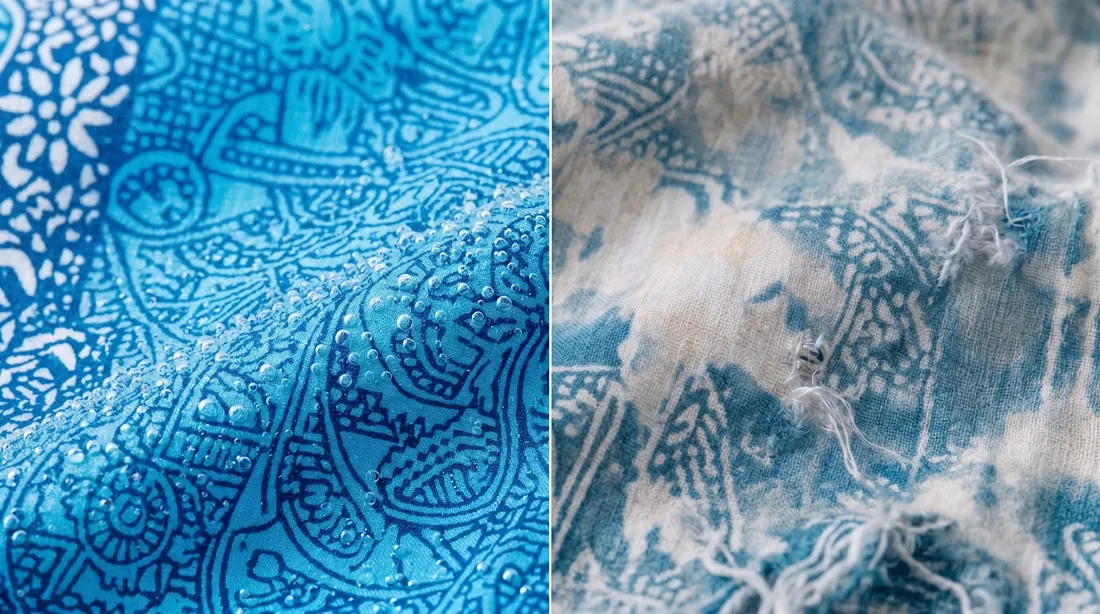
Per the Smithsonian MCI, chlorine bleach will dissolve silk or wool outright, and on cotton and linen it whitens at first but then yellows the fabric slightly and weakens it over time — it is more damaging than hydrogen peroxide. Texas A&M's yellowing entry agrees from the laundry side: yellowing on silk, wool, or spandex is often the result of fiber aging or of chlorine bleach use, and that yellowing is not removable. [2][1]
Never chlorine bleach on rust
Both fetched rust sources give an absolute rule: do not use chlorine bleach on rust stains. Georgia Extension says chlorine bleach will set rust stains; Texas A&M says it will make them permanent. For whites, Georgia Extension instead suggests an oxygen-bleach soak (or a commercial rust remover). [3][1]
A disagreement: bleach on sunscreen stains
Our sources conflict on sunscreen. Georgia Extension's suntan-lotion method includes a 30-minute sodium perborate (oxygen) bleach soak, and Illinois Extension's suntan-lotion page escalates to a chlorine- or oxygen-bleach step for remaining color. Iowa State's sunscreen article advises the opposite: against soaking and against bleach or oxygen-bleach products, describing them as ineffective or liable to make avobenzone stains worse. We present both positions rather than picking one; see the sunscreen stain page for the full treatment options. [4][5][6]
Handling rules
Never mix chlorine bleach with ammonia — the fumes are toxic and dangerous — and never mix it with acids like vinegar or lemon juice, which release chlorine gas. Kentucky Extension adds: do not combine chlorine bleach with enzyme presoak products. [7][8][9][1][10]
When you do bleach, Texas A&M says to bleach the whole garment, not just the spot, to avoid uneven color removal — and notes chlorine bleach has about a six-month shelf life. Michigan State adds: never use or store chlorine bleach in metal containers. [1][9]
On wool carpet, skip bleaches entirely: WoolSafe requires wool-carpet cleaning chemicals to contain no added bleaches, because high alkalinity can cause color bleeding and, in extreme cases, yellowing and weakening of wool fibers. [11]
Related
Sources
- Institutional Texas A&M AgriLife Extension — Removing Stains from Washable Fabrics (accessed 2026-08-18)
- Institutional Smithsonian Museum Conservation Institute — Stain Removal (accessed 2026-08-18)
- Institutional University of Georgia Extension — Remove Stains from Iron, Rust (accessed 2026-08-18)
- Institutional University of Georgia Extension — Remove Stains from Cosmetics (Makeup, Sunscreen) (accessed 2026-08-18)
- Institutional University of Illinois Extension — Suntan Lotion (oil based) — Stain Solutions (accessed 2026-08-18)
- Institutional Iowa State University Extension and Outreach — Sunscreen Stains (AnswerLine) (accessed 2026-08-18)
- Institutional Washington State Department of Health — Dangers of Mixing Bleach with Cleaners (accessed 2026-08-18)
- Institutional Alabama Department of Public Health — Don't Mix Household Chemicals (accessed 2026-08-18)
- Institutional Michigan State University Cooperative Extension Service — Stain Out — A General Guide to Stain Removal (Extension Bulletin E-1453) (accessed 2026-08-18)
- Institutional University of Kentucky Cooperative Extension Service — Stain Removal for Washable Fabrics (FCS2-840 / H.E. 2-840) (accessed 2026-08-18)
- Industry body The WoolSafe Organisation — The Cleaning & Maintenance of Wool Carpets (2020) (accessed 2026-08-18)
Updated 2026-08-18. Compiled from the cited sources; not independently verified by this site. Spotted an error? See the corrections policy.