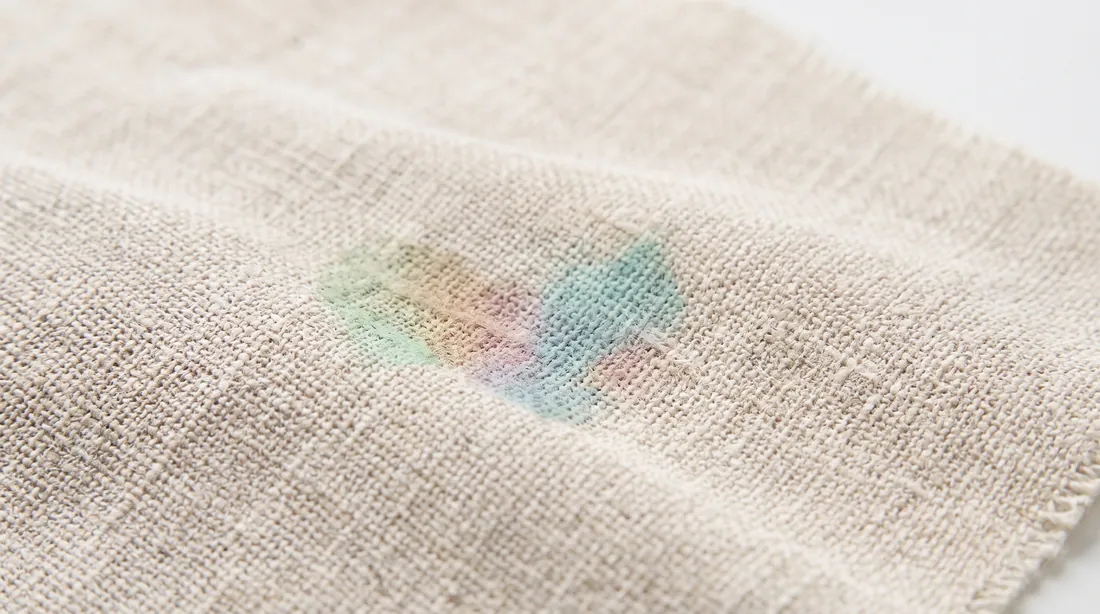
Unknown stains: a safe first response
What to do when you don't know what the stain is — and why the wrong chemical or temperature can set it for good.
First: blot, nothing else
The safe universal first move doesn't require knowing the stain: scoop up any solids, then blot the liquid with a dry white absorbent cloth or plain white paper towels. Don't scrub, and don't wipe — wiping spreads the spill. [1][2][3]
Why guessing at chemicals is risky
Texas A&M warns against applying a chemical unless you are certain it works on the stain in question, because removers that fix one stain set another: coffee, tea, and fruit stains are set by alkalies such as ammonia, while blood and vomit are set by alcohol. [4]
Temperature is a guess too. Kentucky Extension says to avoid hot water on stains you can't identify — if the stain turns out to be a protein stain such as blood or milk, hot water cooks the protein and coagulates it between the fibers. [5]
Greasy or watery? WoolSafe's unknown-spot protocol
For spots of unknown origin on wool carpet, WoolSafe's manual gives an order of operations: try solvents first, in case the spot is greasy or oily, and only then move to water-based agents. Apply the agent to a white towel rather than the carpet, use small quantities, work from the edge of the stain inwards, and do not over-wet. [1]
Keep heat away until it's gone
Whatever the stain turns out to be, do not machine-dry, iron, or press the item until the stain is fully removed — heat sets stains, and a laundered-and-dried stain is nearly impossible to remove. [4][6]
Where knowledge ends
Beyond blotting, cool water, and the solvent-first test above, our sources do not offer a universal method for unidentified stains — the effective treatments are stain-specific. If you can work out what the stain is, use the matching stain page; each one states its own first step and its own list of things that set it.
For anything labeled dry-clean-only, Texas A&M says to take it to the cleaner promptly and identify the stain; Woolmark adds that you should tell the cleaner what the stain is and what treatments you have already applied. [4][7]
Related
Sources
- Industry body The WoolSafe Organisation — The Cleaning & Maintenance of Wool Carpets (2020) (accessed 2026-08-18)
- Industry body Carpet and Rug Institute — Cleaning and Maintenance (accessed 2026-08-18)
- Industry body Natural Stone Institute — Stain Removal (Consumer Resources) (accessed 2026-08-18)
- Institutional Texas A&M AgriLife Extension — Removing Stains from Washable Fabrics (accessed 2026-08-18)
- Institutional University of Kentucky Cooperative Extension Service — Stain Removal for Washable Fabrics (FCS2-840 / H.E. 2-840) (accessed 2026-08-18)
- Institutional University of Illinois Extension — Grease — Stain Solutions (accessed 2026-08-18)
- Industry body The Woolmark Company — Removing Stains from Wool (accessed 2026-08-18)
Updated 2026-08-18. Compiled from the cited sources; not independently verified by this site. Spotted an error? See the corrections policy.